


Welcome to the 17th edition of the Ideas on Design Digest! In this issue, I’ll be talking about leaving a legacy as a designer, and a few other things that caught my eye recently. If you missed the last edition, about design tools, you can read it here.
Things come and things go. Design work is no exception. I know this first-hand. I love designing brands, but I’ve lost pitches and I’ve had plenty of designs shelved. I’ve worked on the design of an office used by more than a thousand people, only for everyone to move out five years later. I’ve rebranded a stock-listed company that was delisted not long after, not to mention startups that were sold and then shut.
People celebrate these moments. They celebrate the exit, the move to the new building, the start of something different. But each time that something I designed disappears, I feel like part of me goes with it.
Maybe it’s the desire to leave something behind, a mark in the world, a brand that endures. Something that, decades from now I could still look at and proudly say: “You know what, we made that.”
Nothing lasts forever though. Not people, not companies, and certainly not brands. The world keeps changing, and lately faster than ever. If there’s a silver lining, maybe it’s the mark we leave on people. What they remember, not what we leave behind. Our brand. Because what is a brand if not a memory?
Other things on my mind:
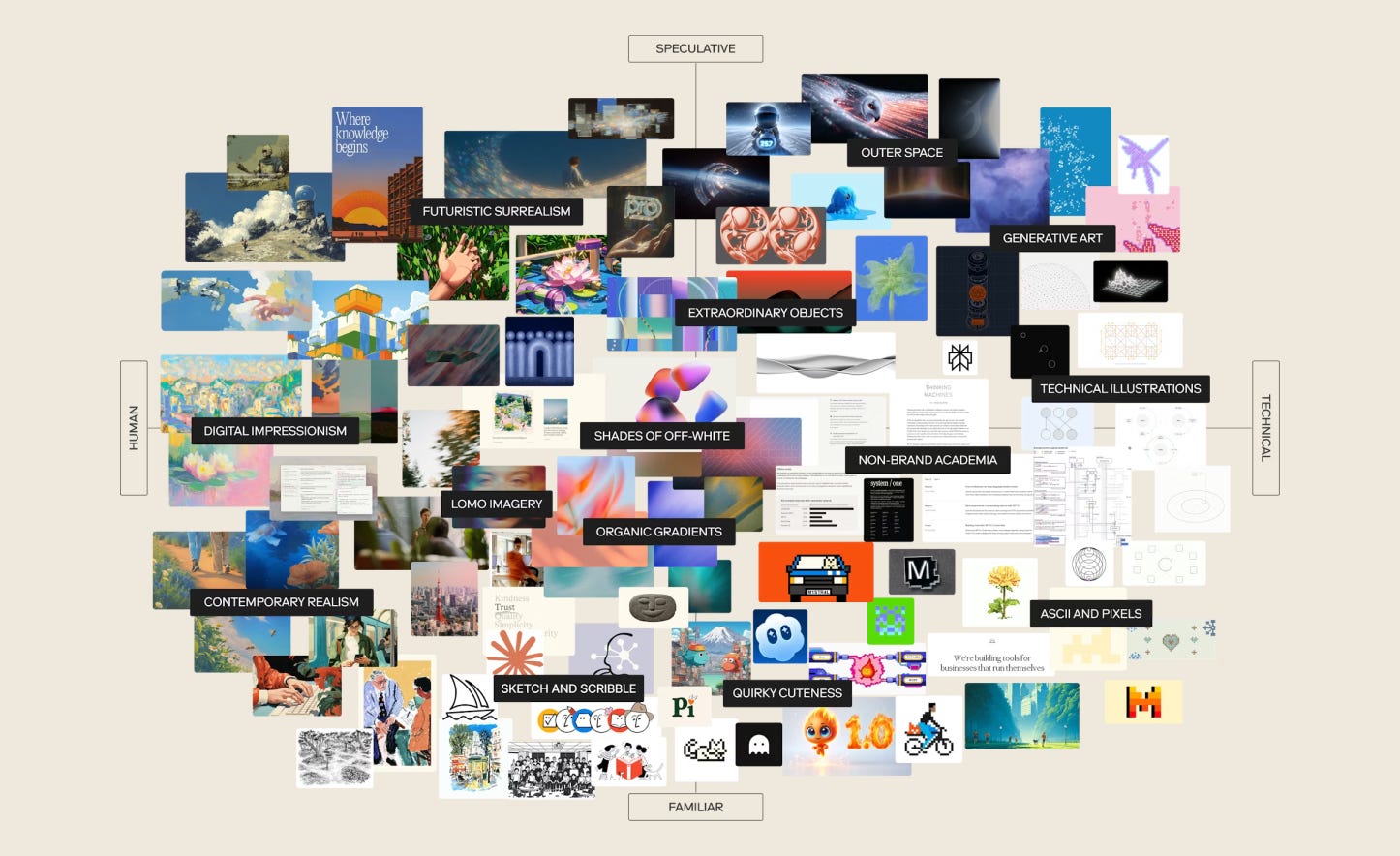
Aesthetics of AI
I stumbled on this deep dive by A Color Bright into how AI brands are presenting themselves visually. It’s way more interesting than any other design trends piece I’ve read recently. What I like the most is their framing: 14 visual trends and five archetypes, from Likeable Leaders to nerdy idealists, and utopian dreamers. It reads a bit like a field guide for designing in a space with little product differentiation.
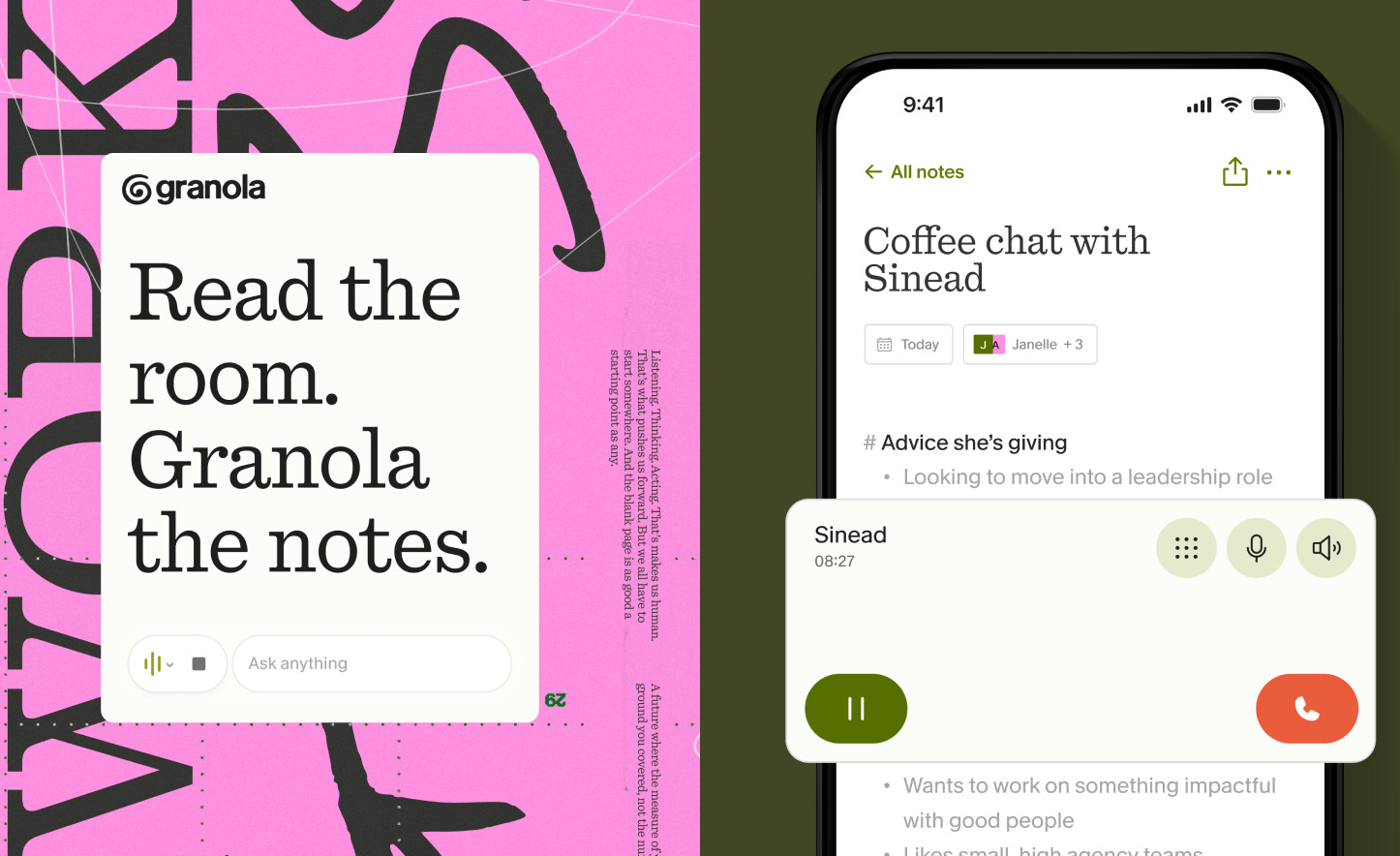
A new look for granola
The most famous AI notepad just received a fresh new look by Ragged Edge. The new visual system introduces a monogram “G” to replace the previous text‑cursor logo. The logo isn’t very exciting, but works well. I really like the visual language though. The combination of the slab serif typography with the textured applications reminds me of typewriters. It looks human, vibrant, and fits note‑taking really well.
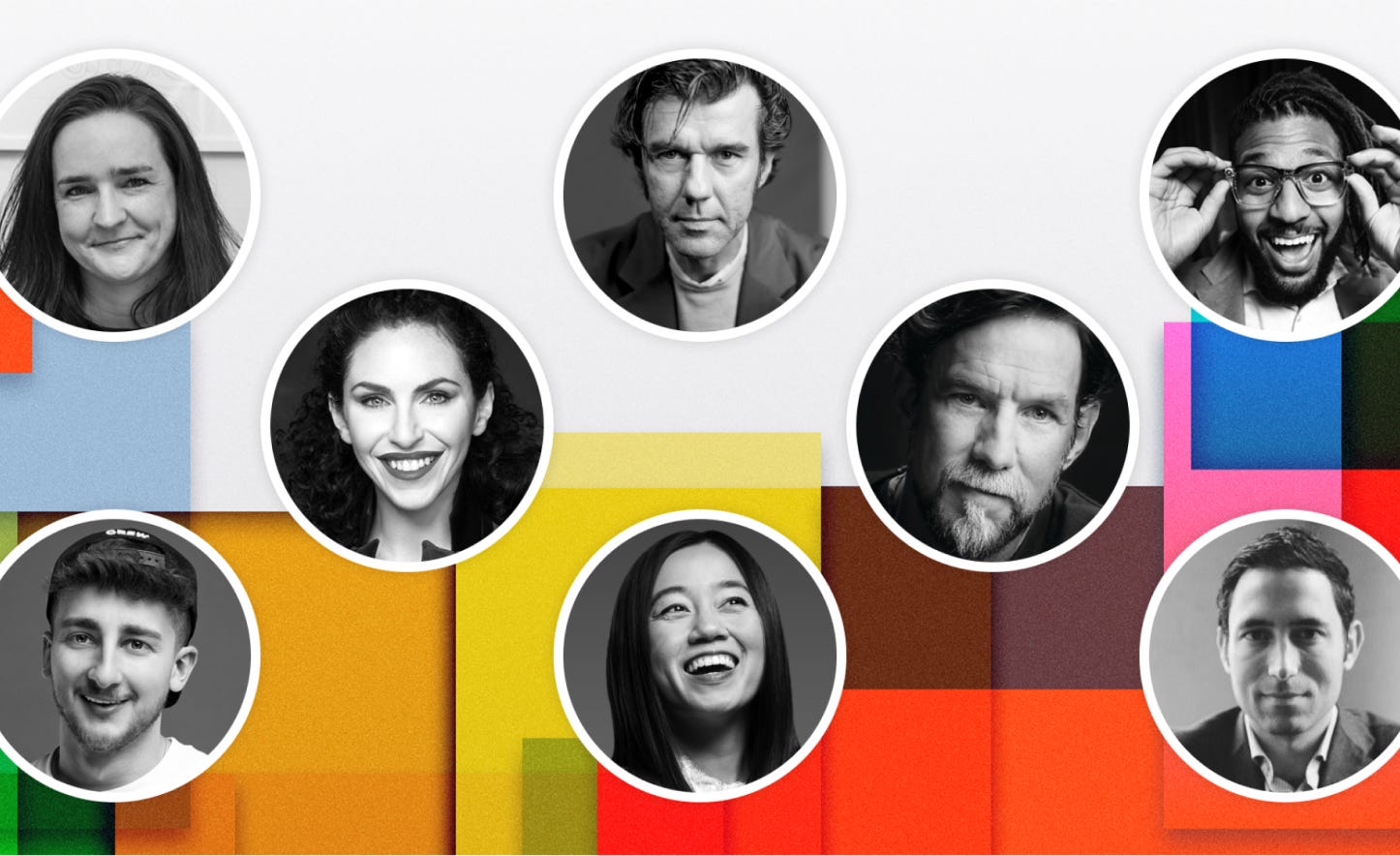
The Adobe Creative Collective
Adobe is rolling out something new called the Adobe Creative Collective. I believe it will be a series of talks and panel discussions involving a handpicked group of creative heavyweights (Stefan Sagmeister, Karen Cheng, Don Allen Stevenson III, and more). The goal is to start a public conversation around AI. I am really curious to hear what people have to say, and whether the opinions of these industry leaders are as nuanced as the opinions of those in the trenches.
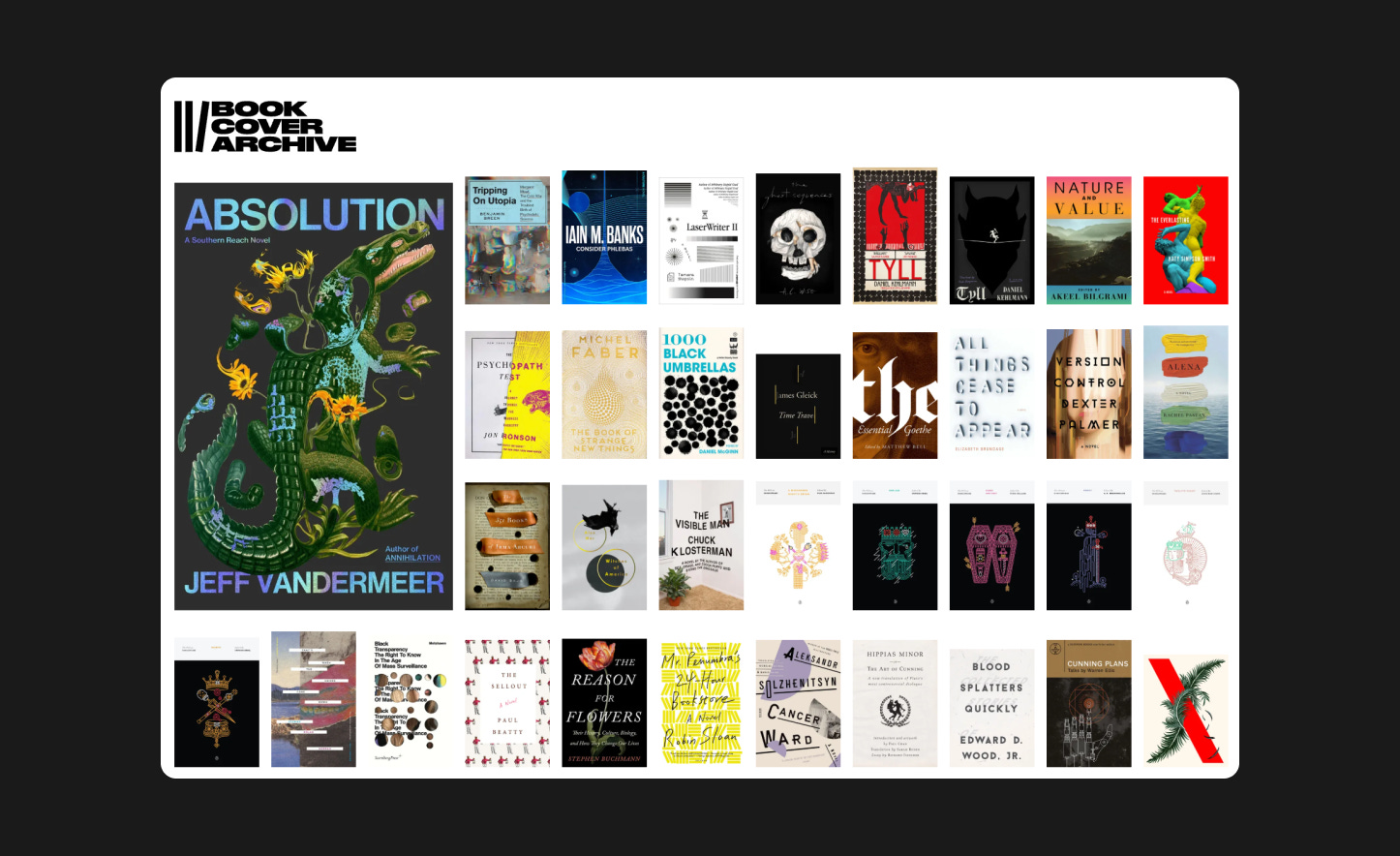
The Book Cover Archive
I like digging through public domain work for inspiration. Part research, part reminder of all the beautiful things that go unnoticed over the years. A recent favourite discovery is the Book Cover Archive by Ben Pieratt and Eric Jacobsen.
Obello: An AI Graphic Design Platform
Obello is an AI-powered design platform where you set up master templates and brand rules once, then you can resize and create new assets, on-brand and without breaking anything. I haven’t tried it yet, but knowing it comes from the people behind the design studio Character (now part of Dentsu) makes it sound promising.
Anthropic Super Bowl Ads
Anthropic just launched its first Super Bowl campaign for Claude, and instead of bragging about product features, it goes straight at OpenAI’s choice to put ads in ChatGPT. The spots created by Mother (there’s 4 of them) remind me of Black Mirror. Funny and a good metaphor for any company that starts leaning heavily on ad revenue.
BBC Winter Olympics Titles
The Olympic Committee is being criticised for producing an embarrassing piece using AI. Human excellence being represented by artificial intelligence… Well, I can’t say the same about the video above, the BBC Winter Olympics title sequence. It looks amazing. Real stop motion, frame by frame, with real props, fire, etc. It’s worth watching the behind the scenes too. Done by BBC Creative, together with NOMINT.
Job Picks of the Month
And before I leave you, here are some interesting open positions I found this month:
Design Bridge & Partners - Senior Designer (Madrid - Spain)
Further - Senior Designer (New York - USA)
Google - Social Marketing Lead (Germany - Hamburg)
Lovable - Brand Designer (Stockholm - Sweden)
Revolut - Campaign Creative Lead (Remote)
Sherpa - Design Director (Germany - Remote)
Superhuman - Head of Enterprise Design ( San Francisco - USA)


It was nice to watch behind the scenes of BBC Winter Olympics. I always have great admiration for stop motion and this kind of creating process.
+ saved couple book covers from the archive.
https://bookmarker.cc/bora/book-covers
David, this really hit home.
What you describe is something most people in our field feel, but few articulate this clearly: that strange mix of pride and quiet grief when work disappears, even if it was once meaningful, even if it was celebrated at the time. You’re right — design is deeply tied to the idea of leaving something behind, and it can hurt when that “something” turns out to be more temporary than we hoped.
I love your last thought especially. If brands are memories, then designers are really working on people, not logos or systems. And by that measure, your work has always lasted longer than any building, pitch deck, or company lifecycle. I still see its traces — in how people think, how teams work, and how standards were raised.
For what it’s worth: some chapters do end, but others have a funny way of reopening when timing, people, and perspective align again. I’ve always valued how you think about design, not just what you design. If paths ever cross again in a more concrete way, that would feel less like nostalgia and more like a very natural continuation.
Until then: thank you for putting this into words. It’s honest, generous, and very you.