


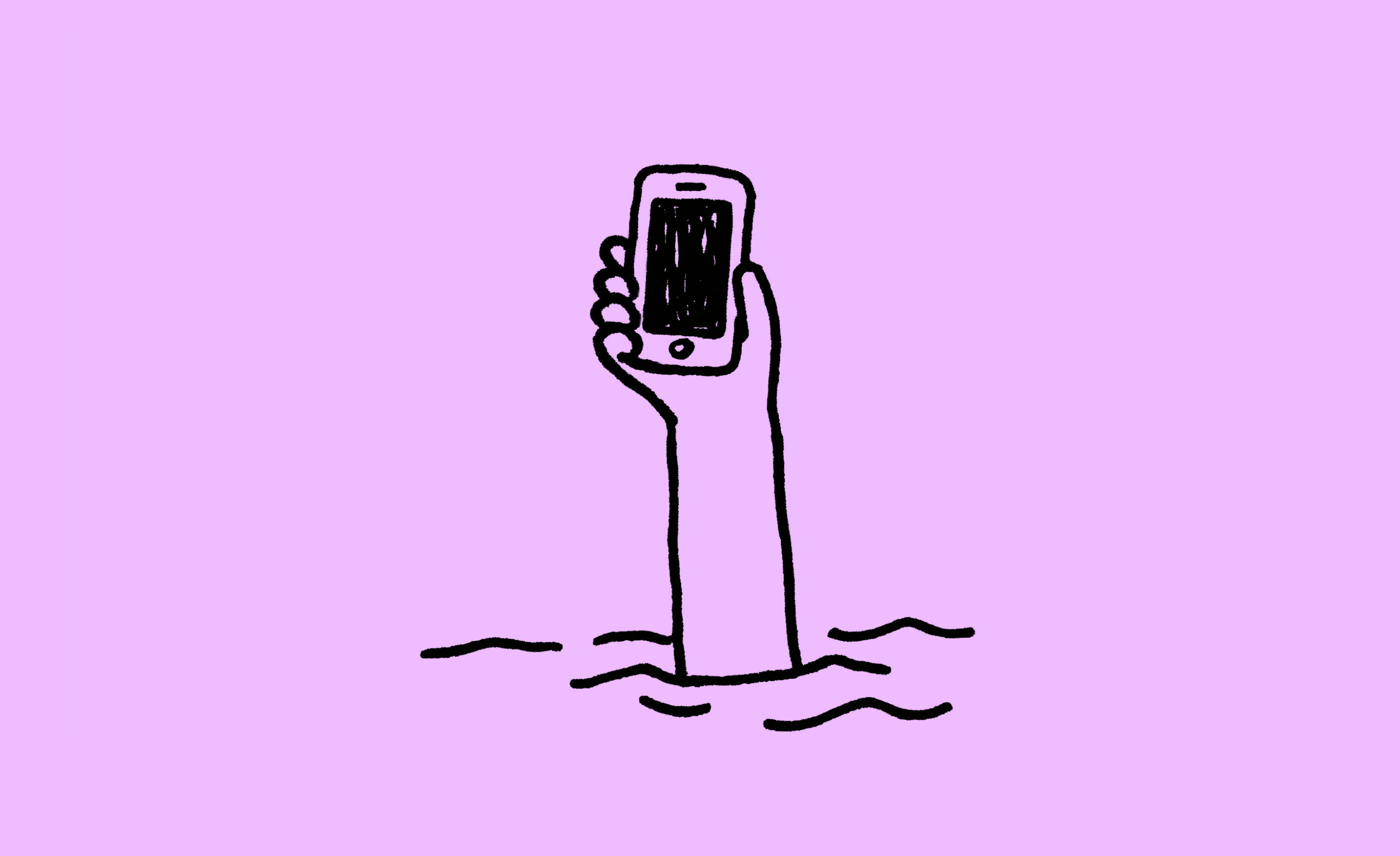
“This is a very complicated world, it’s a very noisy world. And we’re not going to get the chance to get people to remember much about us”
You’ve probably heard this Steve Jobs quote before. It’s almost 30 years old, but it is still a fundamental truth in branding. In 1997, while presenting the iconic “Think Different” campaign to his own company, Jobs made the point that brands need to cut through the noise with one strong idea, or be forgotten. His strong idea was Apple‘s brand purpose.
Since then, thanks to Simon Sinek, brand purpose has become a boardroom buzzword. But for designers, cutting through the noise is even harder now than it was before. The irony is that Steve Jobs saw the problem clearly, but then his company produced the smartphone revolution that made the problem much worse.
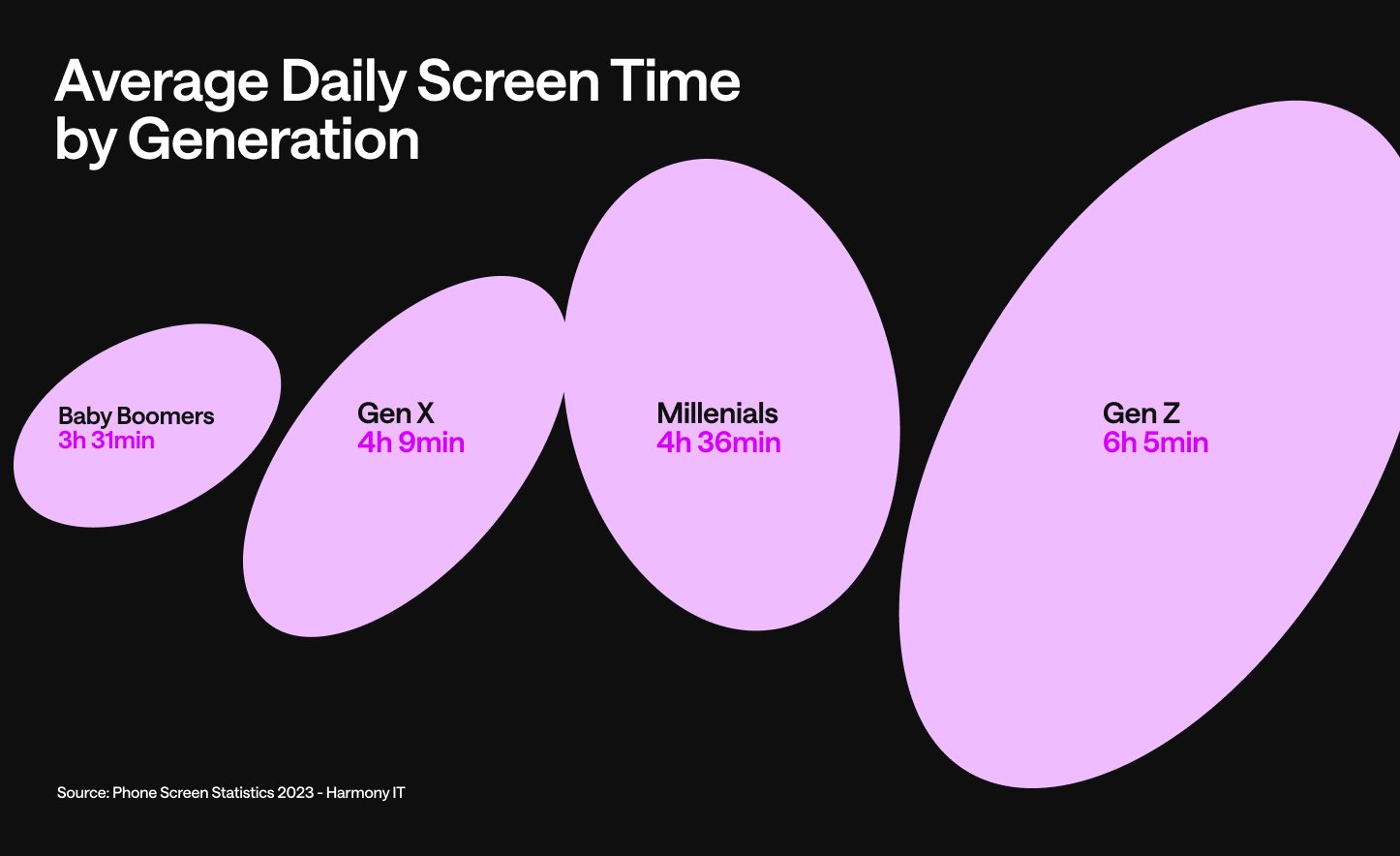
We’re now happily distracted, all the time, on devices that are themselves full of noise. News, articles, videos, platforms, and ads on top of ads on top of ads. This is not only changing how content gets made and consumed, but also how people live. Nobody gets bored anymore because the antidote to boredom is always there, in your pocket.
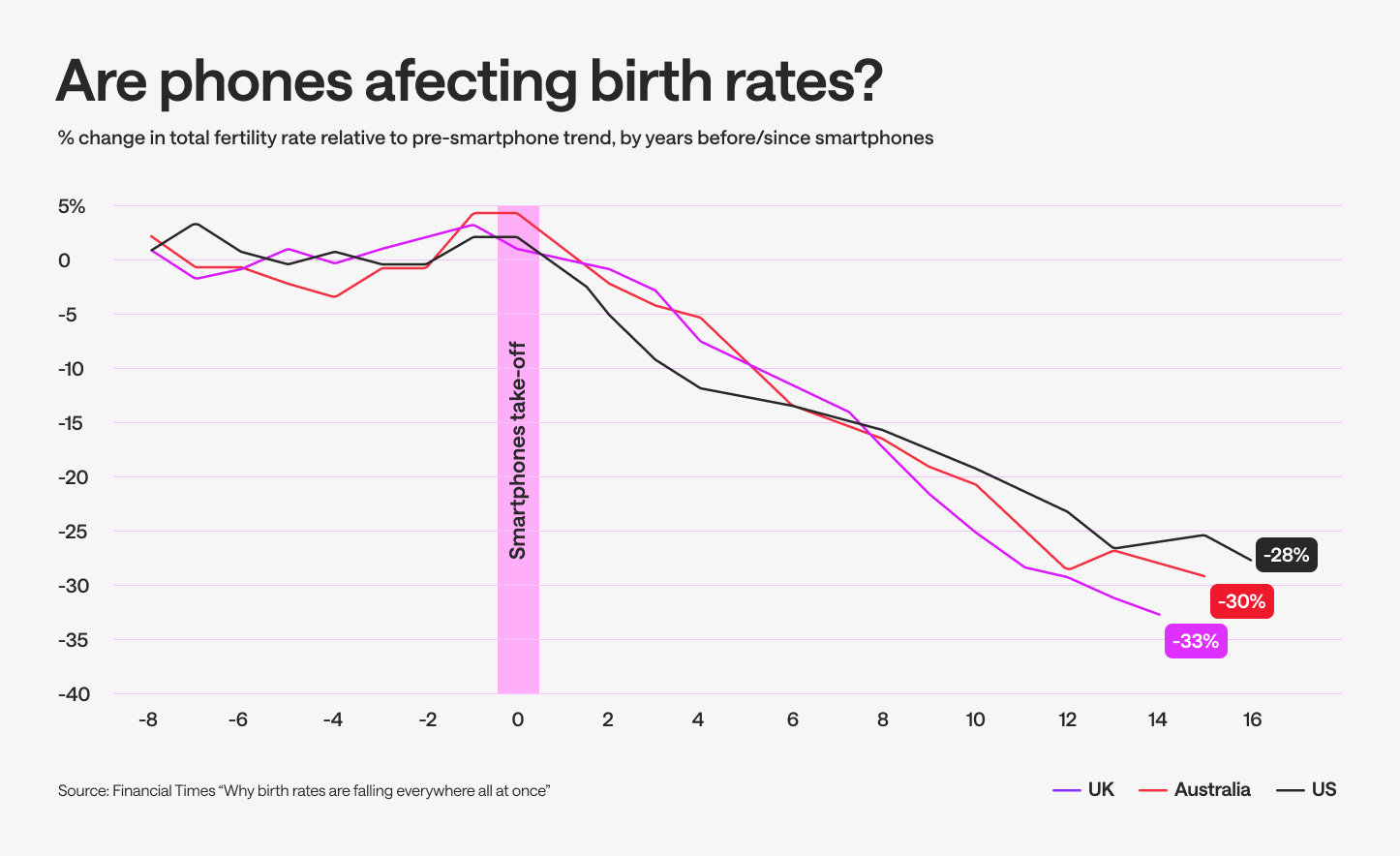
A correlation between smartphone adoption and a decrease in fertility might be just coincidence, but John Burn-Murdoch from the Financial Times recently made an interesting case about it on the FT News Briefing. He argues that the relationships that lead to marriage and kids are built on hours of just hanging out, and young people are hanging out about half as much as they used to. Those hours are now spent on phones.
It’s changing culture too. On the Joe Rogan Experience, Ben Affleck described how phone-distracted audiences have changed the way movies are designed. Less slow storytelling, action up front, and the plot repeated over and over. Movies now have to win our attention back, every five minutes.
Product designers have similar struggles. Nearly half of all apps are uninstalled within 30 days. Many of those go on day one, and the rest ends up forgotten. The usual fix is to make things as smooth and engaging as possible, not to tire the user. But despite all the best efforts, it’s really hard to have people care about a specific product when there’s countless alternatives out there.
In branding, getting people to care and remember is every brand’s fundamental challenge. Especially when it’s easier to ignore and forget. So brands keep pushing harder. The problem is that the harder they push, the more distracted people get. The volume of ads is already so high that most of us have developed ad blindness as a coping mechanism. It feels like 90% of what we see online is either an ad or pretending not to be one.
The platforms that serve ads keep trying to counter this by forcing our attention with ad-breaks, and ad-matching engines, like Meta’s Andromeda, that target you with a constant stream of “meaningful“ and novel creatives, in the hopes of getting us ad-engaged for as long as possible.
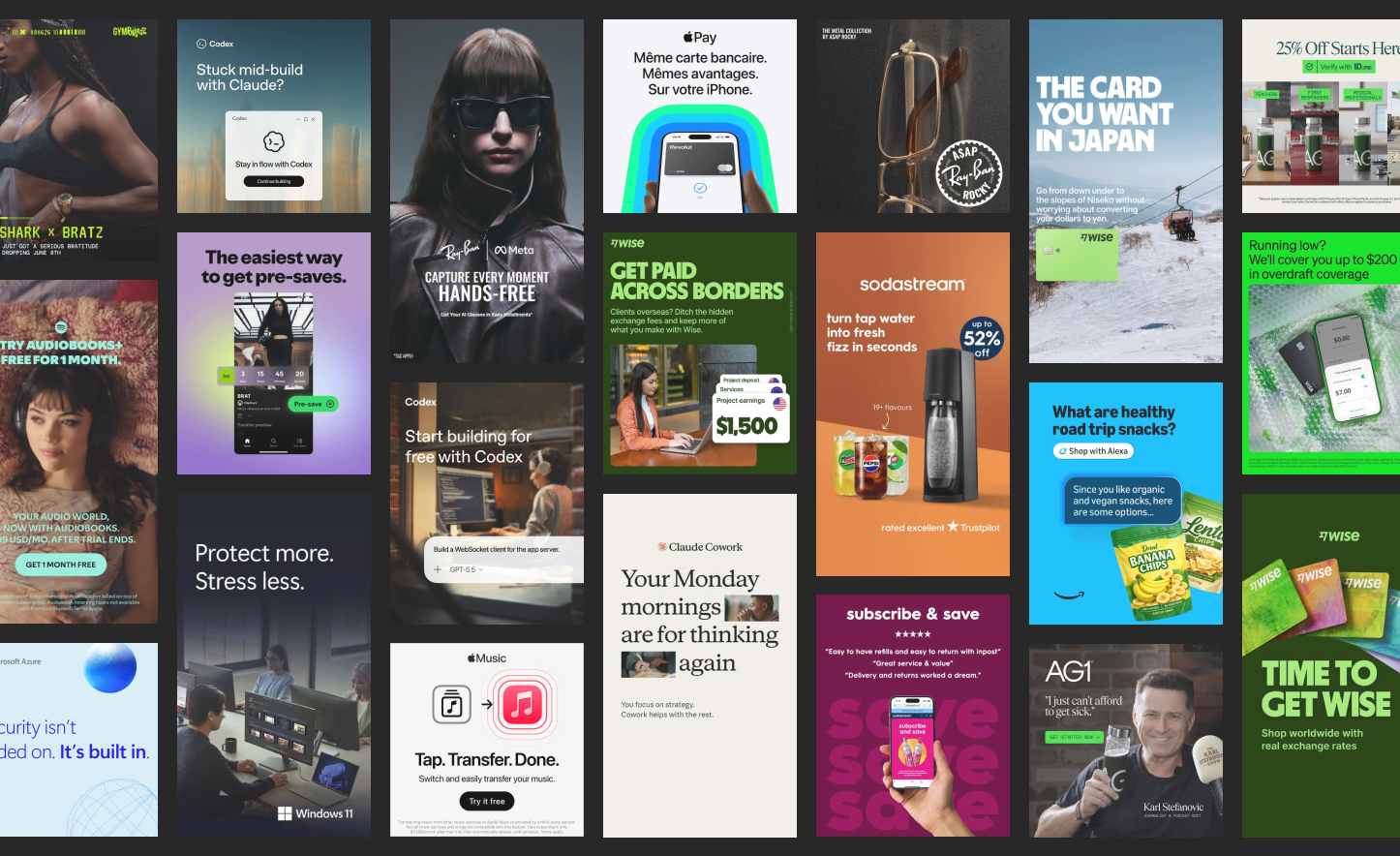
AI is making it worse. Now anyone can ship anything. Small teams are producing at scale what used to take multiple departments. AI has led to a boom in mobile apps. The supply of content also keeps increasing. But the supply of attention does not. I don’t think it’s sustainable to win by making more, producing more noise, when everyone is getting increasingly noisier. It might work for a while. But it’s a race to the bottom.
In a world this distracted, maybe the only thing worth doing is being worth the attention. Being meaningful. Steve Jobs was pointing at this in 1997, before any of it existed. One idea worth remembering, held long enough to be remembered.
I don’t know what happens to the designer profession from here on. But I’m sure this is the part that survives.
I guess "Making it mean something." was always the point of what we do. Means for the people, means for the business, means for us.
David, I'm exploring ways to survive and adopt to this new era, as a freelancer moving away from digital design, as brands and user interfaces are now created without the care required from me. People directly building their own solutions, my services getting less wanted, so the budgets are down.
So what left for us? Human involvement that still produces value for businesses, and provides a living for me. Branding? Creative advertising?
I'm also considering terminating my freelance-design career, open a pub or work at one, something like that in "real life" :/